Cylinder Sections
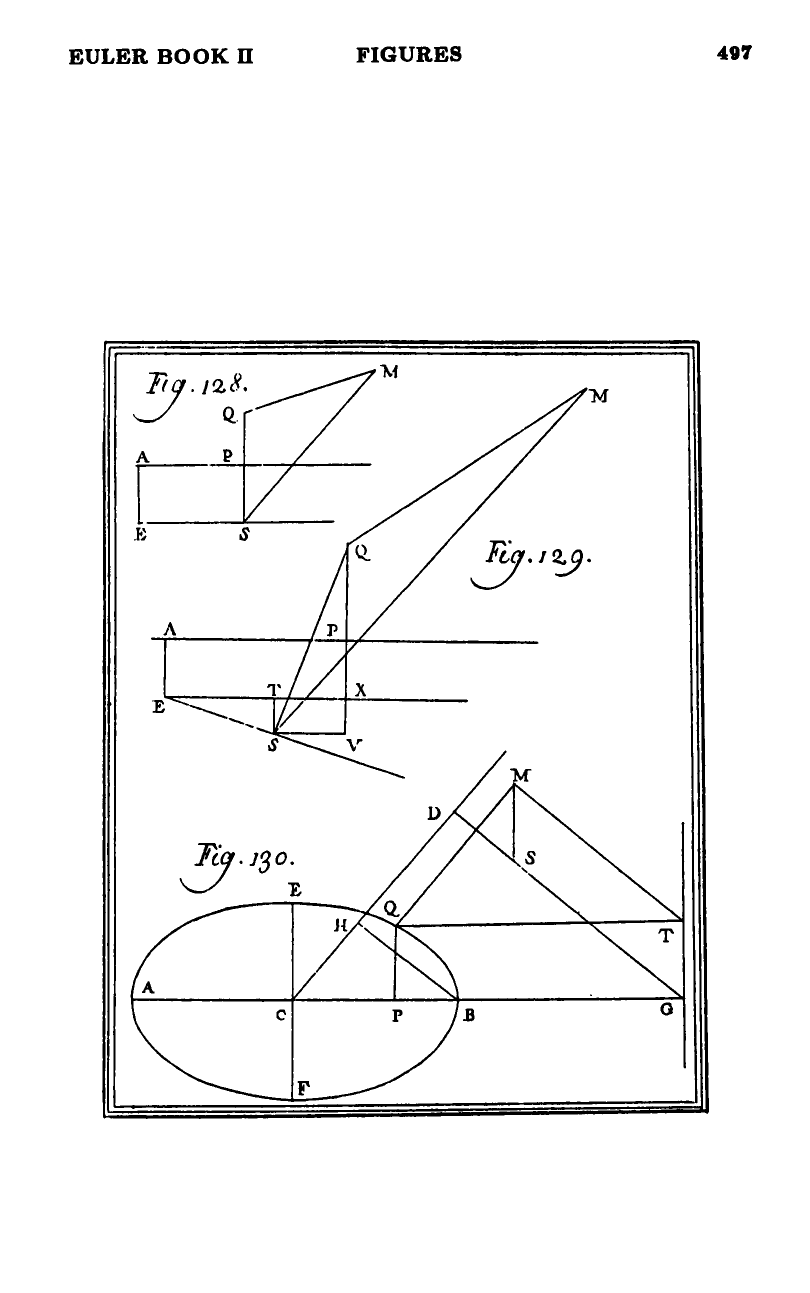
Summary: §§52–67 of the Appendix on Surfaces. Complete section analysis of an elliptical-base cylinder (figure 130). Sections parallel to base = ellipses (or circles if the cylinder is right); sections parallel to axis = pairs of parallel lines or empty; sections oblique to axis = ellipses with semiaxes and when the cutting line is parallel to a conjugate axis (§56), with subcontrary-circle condition when (§57). The general oblique section (§§58–63) gives the headline §64 theorem: for any cylinder section, the product of the conjugate semiaxes is to the product of the base semiaxes as is to .
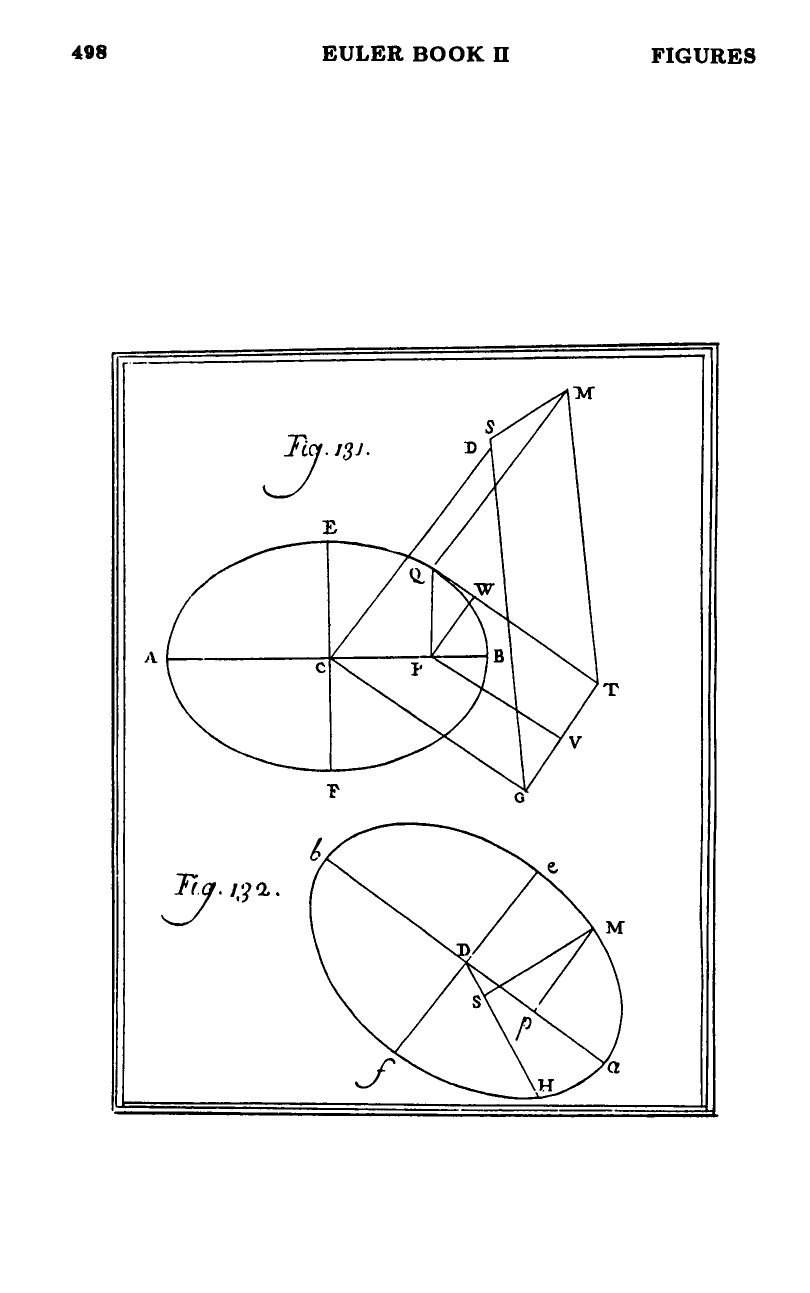
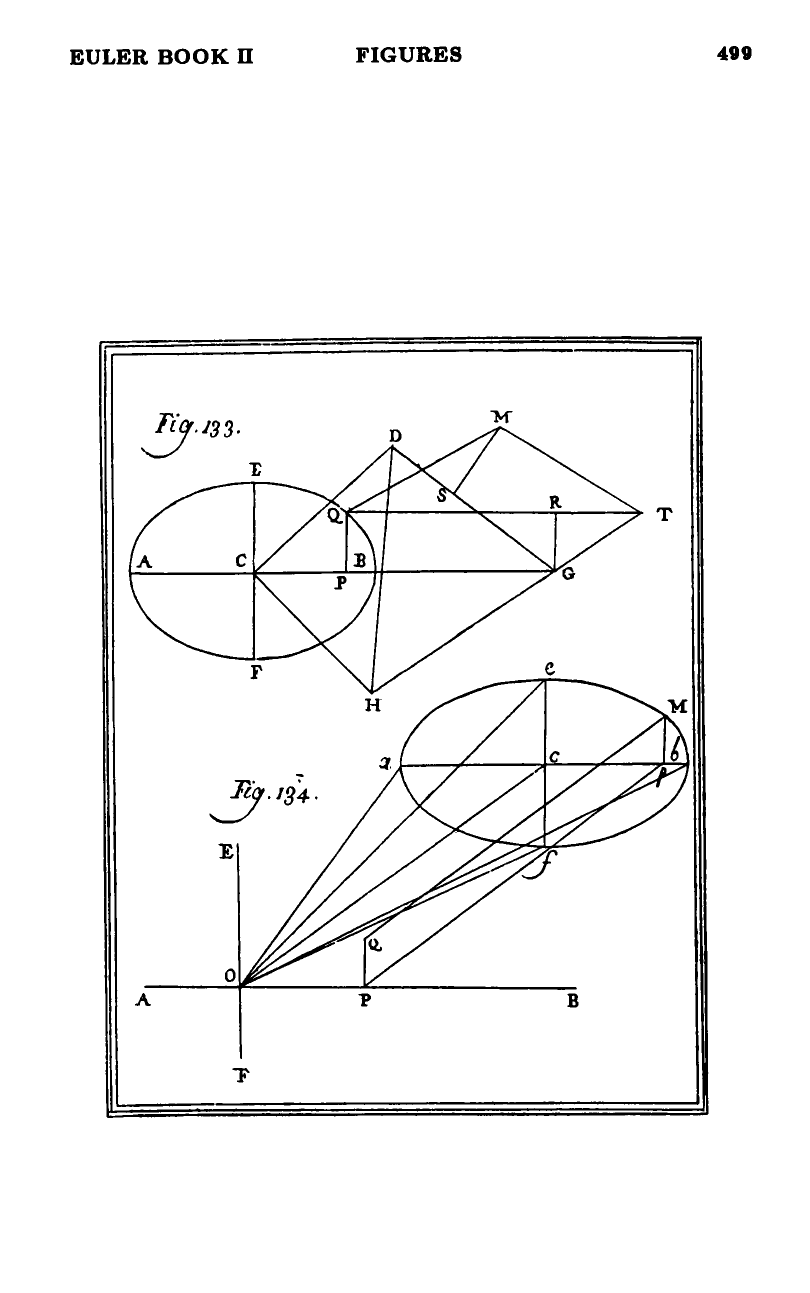
Sources: appendix3, §§52–67. Figures 130–133 in figures128-130, figures131-132, figures133-134.
Last updated: 2026-05-12.
§52 — Right vs. scalene (Euclid)
Euclid distinguishes two cylinder species:
- Right cylinder: all sections perpendicular to the axis are congruent circles whose centers lie on one straight line.
- Scalene (oblique) cylinder: all sections perpendicular to the axis are congruent ellipses whose centers lie on one straight line — but the axis itself is not perpendicular to those sections.
Euler reformulates: a cylinder is scalene if its perpendicular-to-axis sections are congruent ellipses (source: appendix3, §52).
§§53–54 — Equation and parallel-plane sections
Set up coordinates as in figure 130: ellipse base in the table plane, semiaxes , , axis perpendicular to the base. The cylinder satisfies (source: appendix3, §53):
The variable is absent — confirming the §31/§33 cylindrical-and-prismatic-surfaces genus.
Sections parallel to the base = the base ellipse (or circle if right) by §31 (source: appendix3, §54). Sections parallel to the axis, with line of intersection const or const in the base, give pairs of parallel straight lines (or empty if the line misses the cylinder).
§§55–57 — Oblique section parallel to one conjugate axis (figure 130)
Let the cutting plane meet the base plane in a line parallel to , perpendicular to at with . The plane is inclined at ; let be where it meets the axis. Then and .
Take new coordinates , in the cutting plane. After computing and and substituting into the cylinder equation:
This is the equation of an ellipse centered at , with semiaxes
(Source: appendix3, §56.)
Subcontrary-section circle (§57). The section is a circle when both semiaxes coincide:
which holds in two planes (one above the base, one below — both oblique to the axis ). The scalene cylinder is therefore characterized by having two oblique circular sections distinct from the base.
§§58–63 — General oblique section
The cutting line in the base is now oblique to both conjugate axes. Let , , . After the full substitution (with ):
where
Rotation by with diagonalizes the form; the principal semiaxes are then read off (§§61–62). After algebraic manipulation:
( is the key identity, §63.)
§64 — Theorem
THEOREM. If any cylinder is cut by any plane, then the product of the principal axes of the section is to the product of the principal axes of the base of the cylinder as is to the cosine of the angle made by the plane of the section with the plane of the base. (source: appendix3, §64)
In symbols:
Equivalent statement in terms of inscribed parallelograms: every parallelogram on a pair of conjugate axes of any section has area times the area of the section’s ellipse, and that area scales as relative to the base.
This generalizes the §56 special case (cutting line parallel to one conjugate axis, or ) to every oblique cutting plane.
§§65–67 — Reformulation along the cutting line (figure 133)
A cleaner derivation using the perpendicular from the center of the base to the cutting line , with and . The result is the same; this presentation makes the geometry of the oblique cut more transparent for §§68–80 cone-section calculations (figure 134 onward).
Cross-references
- Algebraic test for cylinder: absent. Genus: cylindrical-and-prismatic-surfaces.
- Section method: every formula is a special case of oblique-plane-section-method.
- The §51 universal-quadric-section theorem (general-quadric-surface) is here verified for the cylinder — every section is a conic.
- Conjugate-diameter algebra parallels conjugate-diameters (Chapter 5 §§111–120) for the plane case.
Figures
 Figures 128–130
 Figures 131–132
 Figures 133–134